

UNBUBBLE at wtf26 – Chatting About Bubbles and Unbubbling
by Johanne Koloska
30s Take Aways
No time to read the whole article? Here are the key takeaways in 30 seconds:
What exactly are bubbles?
Our own bubble is a sheltered environment where we interact with like-minded people and feel a sense of direction and belonging.
How does the UNBUBBLE workshop make bubbles visible?
Through movement, self-reflection, and group exercises, participants become aware of their own affiliations and unconscious categorizations.
Why do questions play such an important role?
Questions open up spaces for connection and reveal bubbles that you wouldn’t recognize or even suspect from the outside.
How do genuine connections between people form?
Through active listening, dialogue, and a willingness to accept different viewpoints and remain curious.
What does UNBUBBLE mean for event design?
Good events create spaces for people to identify with others within a bubble and for encounters across bubble boundaries.
Bubbles were everywhere at wtf26.
And if you’re thinking, “WTF?!” That’s exactly what Beke thought last year, too. In her article “future? shaped by us”, she explains what “wtf” means in this context and what to expect at this event.
For me, Johanne, the “wtf” day started with the overheated train-riders’ bubble. Like many others, I arrived at the PALAIS Frankfurt a bit sweaty and with a red face - which is no surprise at nearly 40 degrees. Grateful for the working air conditioning, I walked through the venue and immediately noticed a few other “bubbles.” There were those seeking connection, the enthusiastic, the stressed, the uncertain, the curious, and many more. I immediately empathized with many of them and realized that I’d probably landed back in the empathy bubble.
Bubbles everywhere. But what are they, really?
Our own bubble is a sheltered environment where we move among like-minded people. It gives us security, guidance, and a sense of belonging, but it often also blocks our view of everything else. It can also be a box into which we unconsciously or consciously pigeonhole other people.
There’s one bubble I didn’t mention in my list above, even though it was particularly on my mind that day: the treibhaus bubble. treibhaus is a continuing education program focused on creative concept development in both digital and physical spaces, which I’m pursuing alongside my work at ottomisu.
UNBUBBLE – How an Observation turned into a Workshop
For wtf26, we at treibhaus had the opportunity to develop a workshop on a topic that’s been on our minds. It quickly became clear that the theme should be UNBUBBLE. We were driven by our observation that we often find ourselves stuck in our own bubbles while simultaneously longing for genuine connections.
We played around with the theme as much as possible, starting with the invitation. At the get-together before the welcome, we handed out cards with bubble wrap stuck to the back, bearing the prompt: “PRESS TO UNBUBBLE”. Because sometimes it doesn’t take much to spark curiosity. Bubble wrap, for example. And maybe that curiosity will even cause a bubble or two to burst.
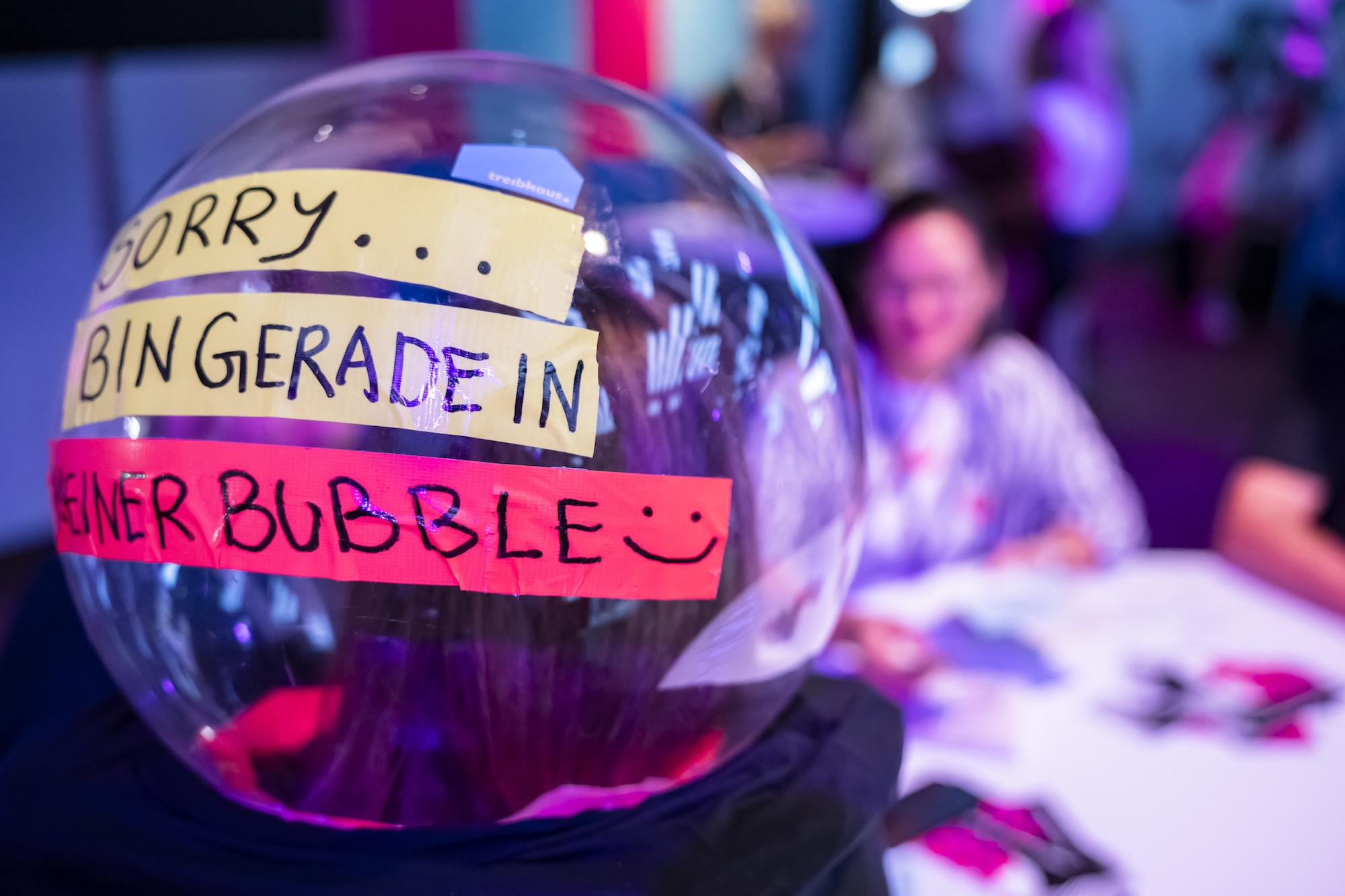
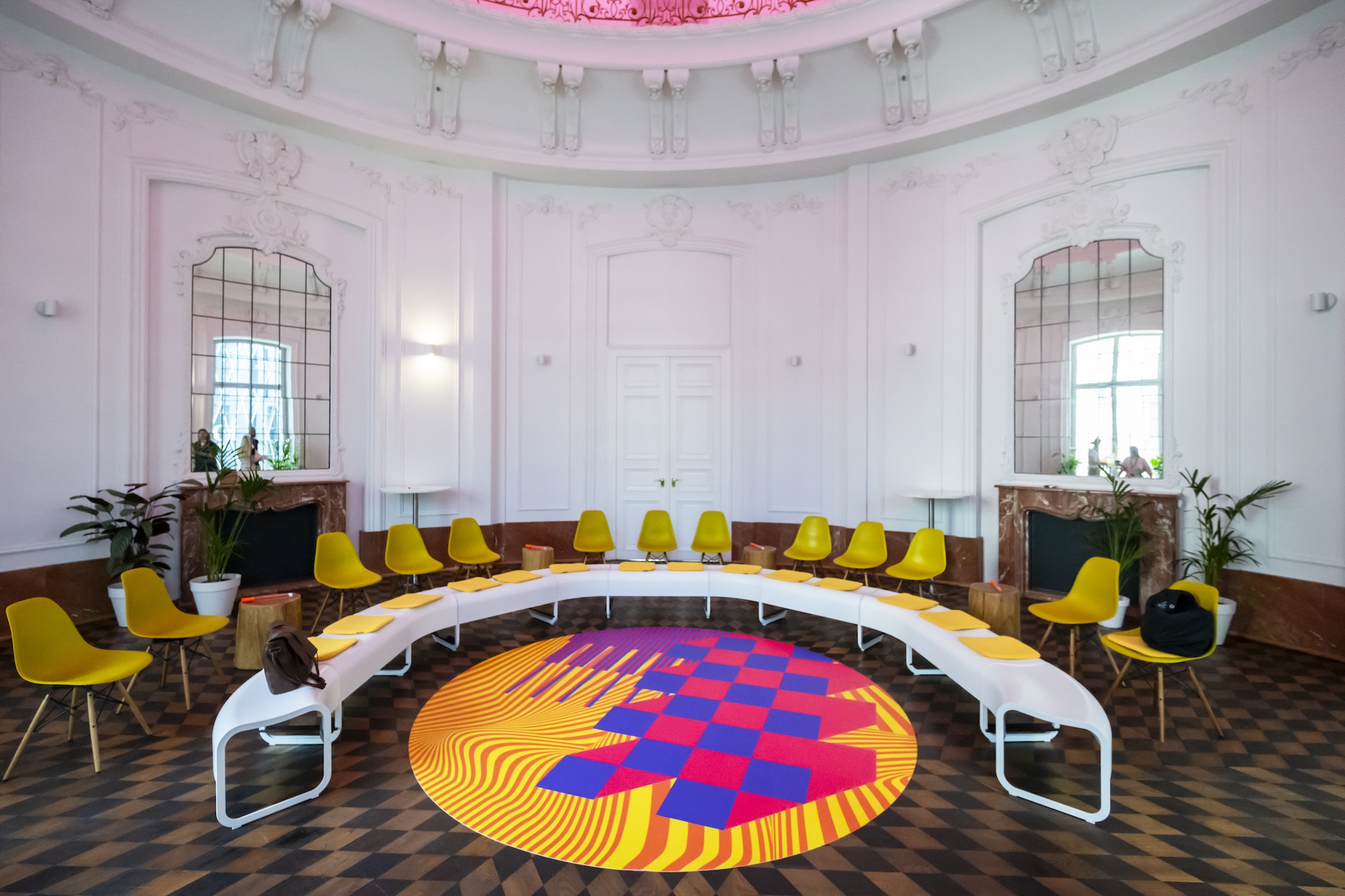
The room itself was also meant to be part of the message. The domed hall, round like a bubble, with a seating arrangement that reflected that. Anyone who entered it automatically became part of something: the UNBUBBLE bubble.
The workshop itself followed a logic that only later turned out to be part of something bigger. But more on that later.
Phase 1: Who Am I? – Sensing Your Own Bubble
Before you can get to know someone else’s bubble, you first have to become aware of your own. That sounds more obvious than it is. Because bubbles are so familiar that we hardly notice them anymore. So we started by making them physically tangible.
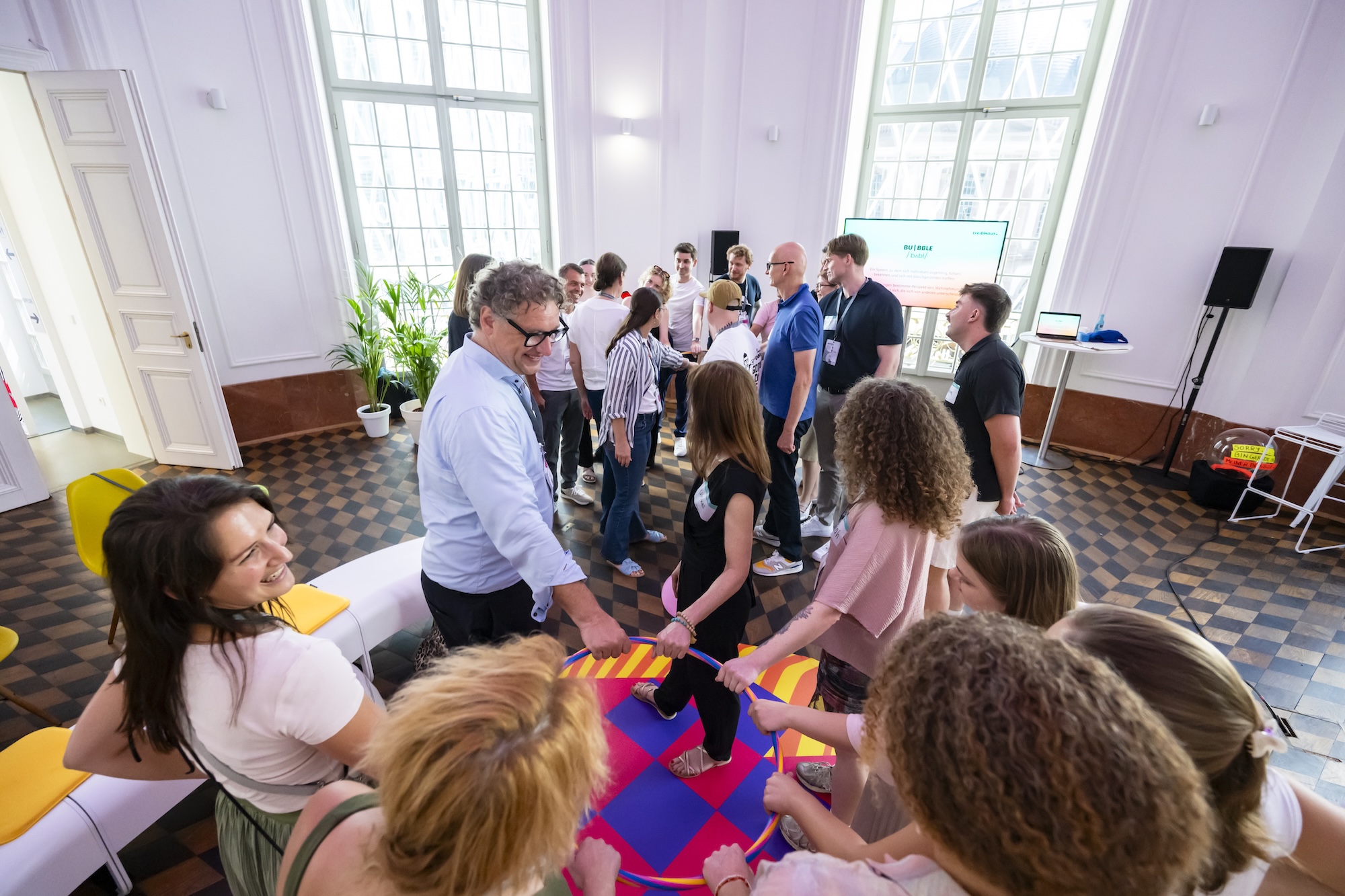
Everyone moved freely around the room, arms outstretched, drawing circles, forming spheres. Who approached? Who stepped back? Who kept their distance?
Along the way, something happened that we couldn’t have stopped: everyone categorized each other and pigeonholed one another, automatically and unconsciously.
We wanted to make that visible.
So two people stood in the room holding hula hoops. The invitation: Connect with the person if you feel you have something in common with them. It wasn’t about knowing it, but about feeling it. Individuals were asked what they thought - which “bubble” they shared. For the most part, they were right.
After that, things picked up speed. While music played, terms were called out one after another: “morning person,” “imposter syndrome,” and “helper syndrome,” among others. Anyone who felt they belonged quickly gathered with the others from that “bubble”. Within minutes, connections formed between people who hadn’t known each other before.
Phase 2: Wie ticken die anderen? – Fragen als Türöffner
Becoming aware of your own bubbles is a first step. But that alone doesn’t change anything. To bring about change, you have to get to know other people and their bubbles. And you often do that by asking questions.
That’s why we took it a step further, starting with this insight: We aren’t just the ones seeking connection, the enthusiastic ones, the stressed-out ones, the insecure ones, or the curious ones. We are the sum of all our bubbles. And it’s exactly the same for everyone else in the room. But many of these bubbles aren’t visible from the outside. We don’t recognize them by appearance or job title. What makes them visible are questions. They open up spaces that would otherwise remain closed.
But asking questions takes courage. So first, we showed what happens when you muster that courage. Three people described a situation in which they had already found themselves in one of their bubbles that day: the awareness bubble, the “what-if” bubble, and the social media bubble. They then asked the group: “Does this sound familiar?” The more you could relate to it, the closer you were supposed to stand; the less you could relate, the farther away.
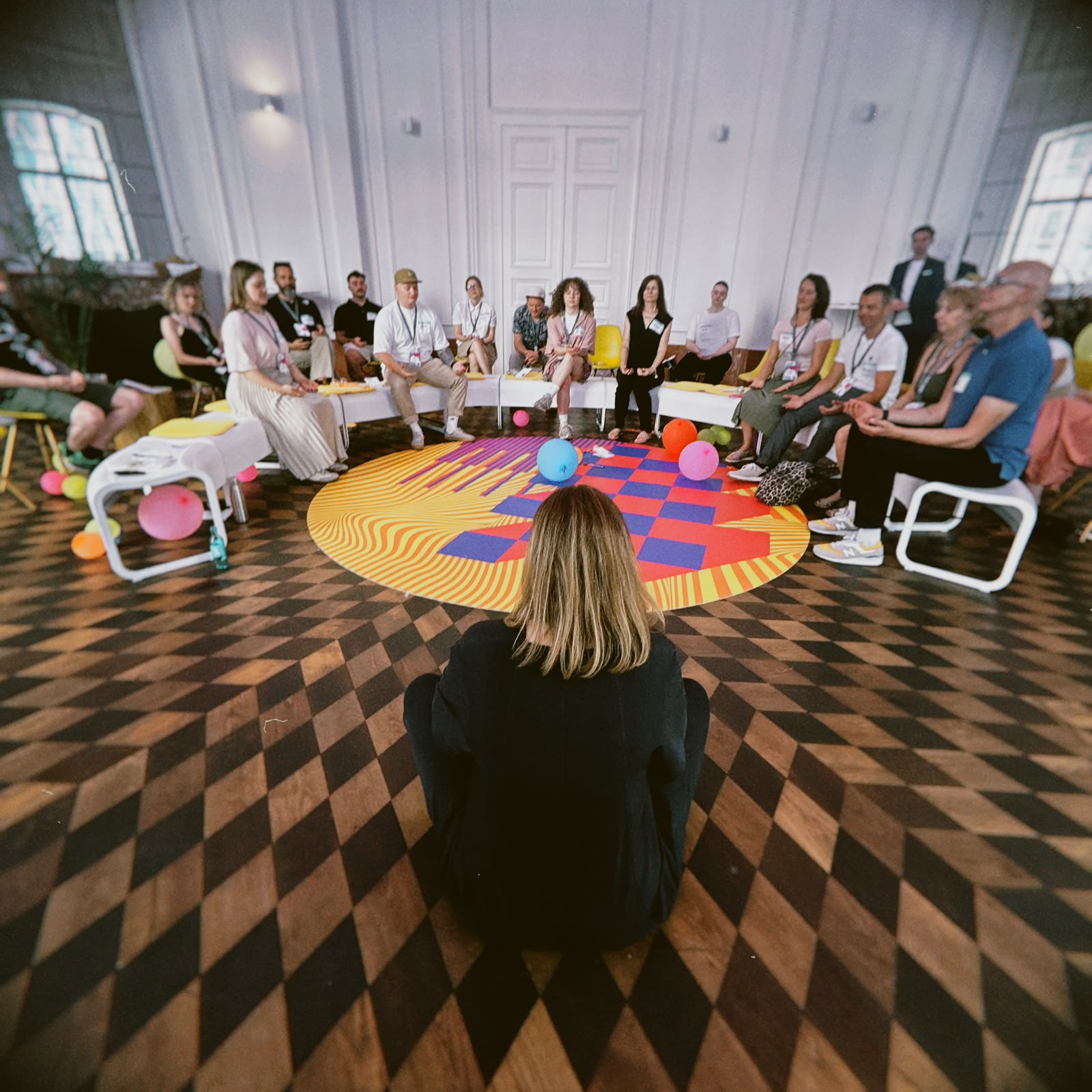
Phase 3: Was verbindet uns? – Vom Austausch zur Verbindung
Answering a question nonverbally is one thing. Talking about it is quite another. And it’s only when you start engaging in genuine conversation that connections are formed.
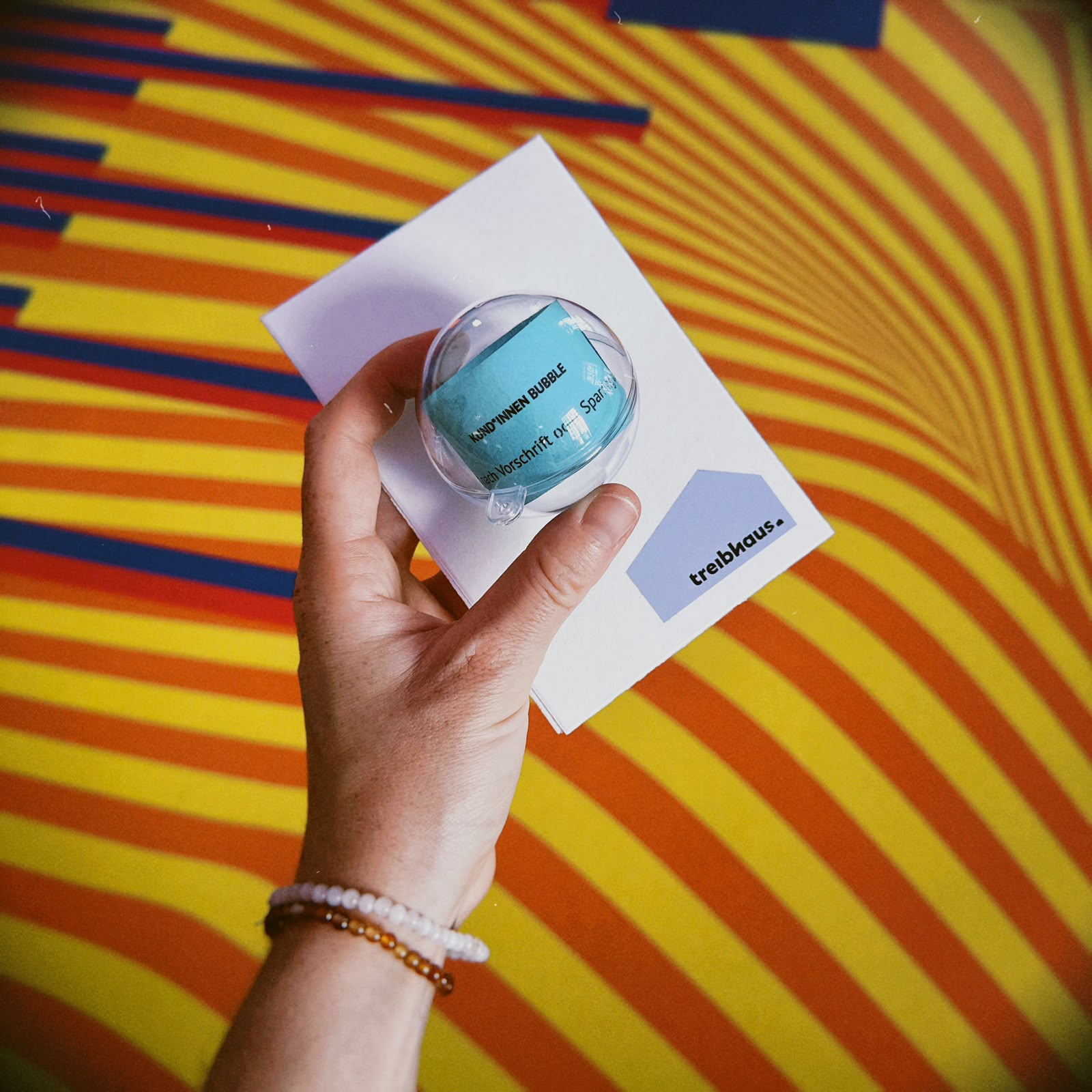
So each person received a ball containing a question and answered it silently on a card. Then the ball was passed along, and teams of two were formed. Each team now had two questions and three different answers for each: the written answer from a stranger, the spoken answer from their partner, and their own spontaneous response. Participants were encouraged to ask further questions, listen, and allow for disagreement. Suddenly, they were no longer just the ones answering - they were also the ones asking. A small but crucial shift: whoever asks a question opens up a space. And whoever opens up a space invites someone to step outside their bubble. This gave rise to something that’s hard to plan: genuine exchange.
The parting gift, of course, fit the theme: a pack of Hubba Bubba as a reminder to let your own bubble burst every now and then, even after the workshop.
A Circle That Closes
It wasn’t until later that I realized Helge Thomas had opened SHIFT2019, hosted by ottomisu, with a speech that revolved around precisely this topic. He spoke about how we automatically pigeonhole people as soon as we get to know them, and that genuine connections only form when we stop doing that. And that events are the format that possesses this transformative power: to move people emotionally, change mindsets, and create spaces where genuine encounters become possible.
He concluded with three questions that describe how this can be achieved: Who am I? What makes others tick? And what connects us?
What was then presented as a call to action in that room was brought to life by the treibhaus team in 2026 - completely independently of that event - in a workshop format.
You can find a video of his speech here in this post.
Der Blick in die andere Bubble: Wie kam der Workshop an?
In addition to the “idea generation and format development” bubble, the “experience” bubble is, of course, also relevant. Here, Beke can share her experiences - this time not as a crew member, but as a participant at wtf, where she experienced the workshop from the other side:
For me, the event industry thrives on courage. The courage to approach things differently. The courage to contribute yourself and your ideas. And the courage to do that every single day - in an industry that thrives on exactly that! wtf showed me that once again this year.
The UNBUBBLE workshop also required courage. Revealing your own bubble, stepping out of it, and actively engaging with other bubbles - that’s not easy at first. It helps that everyone in the event industry shares a similar mindset and brings the right qualities to workshops like this: a sense of community, openness, a thirst for knowledge, and a constant willingness to exchange ideas. That’s exactly how I experienced my workshop session at wtf.
Still, seemingly “silly” icebreakers are exactly what’s needed: they break down any remaining small barriers, and the direct visibility of shared bubbles fosters closeness and trust.
The personal stories shared by the treibhaus hosts also reinforced one’s own thoughts. This left us perfectly prepared for the exchanges and discussions of questions and answers with other participants. Not always putting my own perspective first, but consciously trying to understand others’ responses, was a significant step for me - one that nevertheless brought me closer to those around me.
When we ran into each other at the venue after the workshop, there was somehow a special connection with the other participants from the UNBUBBLE bubble - whether we’d had in-depth conversations, sat next to each other, or realized during the initial exercises which bubbles we shared.
But what does that mean for me when it comes to event design? It means that participants need both: the ability to identify with people from their own bubble, but also the opportunity for cross-bubble exchange. We can design the spaces and provide appropriate formats to facilitate this - but everyone must bring the courage to engage with one another in this way on their own.
UNBUBBLE shows that good event formats don’t just connect people who are already similar. They create safe spaces where different perspectives become visible and encounters become possible. That is precisely where the special impact of live communication lies.
And what can we take away from this for our everyday lives? Perhaps it’s the realization of where we ourselves operate within bubbles, where we hastily categorize others, and when we dare to step into a different perspective. Perhaps that’s why the motto is: less pigeonholing and more “unbubbling.”